

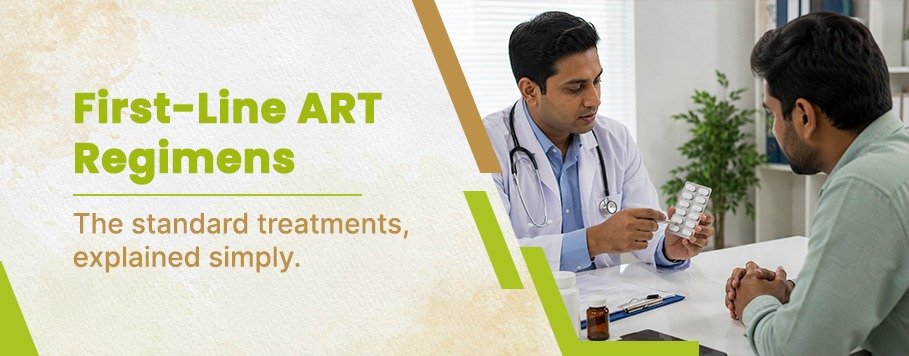
If you or someone you know is starting HIV treatment, you may have heard the phrase “first-line ART regimen” and wondered what it means. It sounds technical, but the idea is simple. This guide explains, in plain language, what a first-line ART regimen is, how it is put together, and what to expect, so the medicine feels less like a mystery.
You do not need to memorise drug names to understand your treatment. What matters is grasping the basics and knowing your doctor has chosen a regimen suited to you.
Quick Summary / Key Takeaways
|
What Is a First-Line ART Regimen?
A “regimen” simply means the specific combination of medicines you take. “First-line” means the first regimen someone is started on, the standard, recommended starting point for most people. If, for any reason, a change is needed later, the next option is called second-line, and so on. For the wider picture, see our complete guide to HIV treatment in India.
Why Is ART a Combination of Medicines?
HIV is a clever virus, and a single medicine on its own would not hold it back for long. So ART combines a few medicines that each block the virus at a different stage of its life cycle. Attacking from several angles at once is far more effective and helps stop the virus from adapting. This is the core idea behind what is ART (antiretroviral therapy).
How a First-Line Regimen Is Built
Without getting lost in drug names, a typical modern regimen combines medicines from different classes that each do a specific job:
- Some medicines block the virus from copying its genetic material.
- Others block a key step the virus needs to insert itself into cells.
Combined, these keep the virus from multiplying. The good news is that modern regimens often package these medicines into a single daily tablet, so treatment is simpler than it used to be.
What Modern First-Line ART Looks Like
| Feature | What it means for you |
|---|---|
| Combination of medicines | Blocks HIV at several stages for strong control |
| Often a single daily tablet | Simple to take, once a day |
| Well tolerated | Modern regimens are gentler than older ones |
| Effective | Designed to bring viral load down to undetectable |
| Adjustable | Can be changed if side effects or other needs arise |
How Your Doctor Chooses Your Regimen
There is no single “best” regimen for everyone. Your doctor selects one based on factors such as your overall health, any other conditions or medicines, and what suits your life. This is why treatment is personalised, and why it is chosen with a clinician rather than picked off a shelf. You can discuss your options during an HIV doctor consultation.
What to Expect When Starting
- Some people notice mild side effects at first, such as nausea or headache, which usually settle within weeks.
- Take your regimen every day, ideally at a consistent time, to keep it working.
- Regular HIV lab testing checks that the regimen is working and your health is on track.
- Never stop or change your regimen on your own; talk to your doctor about any concerns.
Can a Regimen Be Changed?
Yes. If a first-line regimen causes side effects that do not settle, or does not suit you for another reason, your doctor can switch you to an alternative. Changing regimens is a normal part of care and is always done with medical guidance. Cost can also be part of the conversation; see generic vs branded ART in India.
Myths vs Facts: First-Line ART
| Myth | Fact |
|---|---|
| You need to understand every drug name to take ART. | You just need the basics; your doctor manages the details. |
| One HIV medicine on its own is enough. | ART combines medicines to block HIV at several stages. |
| Modern ART means many pills a day. | Modern first-line regimens are often a single daily tablet. |
| A first-line regimen can never be changed. | It can be switched with medical guidance if needed. |
| The same regimen suits everyone. | Regimens are personalised to your health and circumstances. |
| When to Consult a Doctor Speak to a doctor when starting HIV treatment, if you have side effects that do not settle, if you take other medicines that may interact, or if you have concerns about your regimen or its cost. Never stop or switch treatment on your own. When in doubt, consult an HIV specialist or healthcare professional. |
Conclusion
A first-line ART regimen is simply the first combination of HIV medicines most people start with, chosen by your doctor to control the virus effectively while fitting your life. Modern regimens are effective, well tolerated, and often just one tablet a day. You do not need to be an expert in the medicines; you just need to take them consistently and stay in touch with your care team.
If you are starting treatment or have questions about your regimen, expert guidance helps. TAAL+ Healthcare offers HIV treatment & ART care and a confidential HIV doctor consultation to help you start treatment with confidence.
Frequently Asked Questions
What is a first-line ART regimen?
A regimen is the specific combination of HIV medicines you take. First-line means the first, standard regimen most people are started on. If a change is needed later, the next option is called second-line, and so on.
Why is ART a combination of medicines?
HIV can adapt to a single medicine, so ART combines a few medicines that each block the virus at a different stage. Attacking from several angles at once is more effective and helps prevent the virus from adapting.
Is first-line ART just one tablet a day?
Often, yes. Modern first-line regimens frequently combine the needed medicines into a single daily tablet, which makes treatment simpler than it used to be. Your doctor will confirm what your regimen involves.
How does my doctor choose my regimen?
Your doctor selects a regimen based on your overall health, any other conditions or medicines, and what suits your life. Treatment is personalised, which is why it is chosen with a clinician rather than picked off a shelf.
What should I expect when starting first-line ART?
Some people have mild side effects at first, such as nausea or headache, which usually settle within weeks. You take the regimen daily, ideally at a consistent time, and have regular monitoring to confirm it is working.
Can my first-line regimen be changed?
Yes. If it causes side effects that do not settle or does not suit you, your doctor can switch you to an alternative. Changing regimens is a normal part of care and is always done with medical guidance.
Do I need to understand all the drug names?
No. You only need the basics; your doctor manages the details. What matters most is taking your regimen consistently and raising any concerns with your care team.
Is generic first-line ART as good as branded?
Yes. Generic and branded ART contain the same active ingredients and work the same way; the main difference is cost. India produces affordable generics widely used in first-line treatment.


