


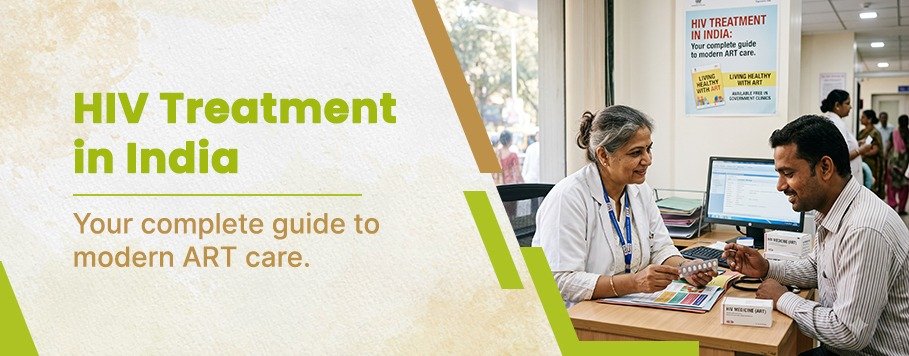
HIV treatment has transformed beyond recognition. What was once a life-changing diagnosis is now a manageable, long-term condition, and people living with HIV in India can expect long, healthy, full lives. At the heart of this change is antiretroviral therapy, or ART. This complete guide explains HIV treatment in India clearly: what ART is, how it works, when to start, what to expect, and how to live well on treatment.
Whether you have just been diagnosed, are supporting someone, or simply want to understand your options, this guide is your starting point, with links to more detailed articles on each part of the journey.
Quick Summary / Key Takeaways
|
What Is HIV Treatment?
HIV treatment means taking medicine, called antiretroviral therapy (ART), to control HIV. ART is not a cure, but it keeps the virus suppressed so it cannot damage the immune system or progress to serious illness. For the basics, see our guide on what is ART (antiretroviral therapy), and access care through HIV treatment & ART care.
How Does ART Work?
HIV works by making copies of itself and affecting the immune system. ART uses a combination of medicines that block this process at different stages, so the virus can no longer multiply effectively. Over time, this brings the amount of virus in the body (the viral load) down to very low levels.
Because ART usually combines more than one medicine, it attacks the virus from several angles at once, which is both highly effective and helps prevent the virus from adapting. Modern regimens are often a single daily tablet that combines these medicines together.
When Should HIV Treatment Start?
Current guidance is clear: treatment should start as soon as possible after diagnosis, regardless of how well someone feels or their immune (CD4) count. This is often called the “treat-all” approach, and it is recommended by the WHO and followed in India. Starting early protects the immune system before changes occur.
Experience shows why this matters. Many people feel completely healthy when diagnosed and are tempted to wait. But HIV works silently, so starting treatment promptly, while you feel well, is exactly what keeps you well.
The HIV Treatment Journey
| Stage | What happens |
|---|---|
| Diagnosis | A confirmed HIV test and an initial assessment |
| Baseline tests | Viral load, immune (CD4) count, and general health checks |
| Starting ART | Beginning treatment, usually soon after diagnosis |
| Reaching undetectable | Viral load falls, often to undetectable within months |
| Ongoing care | Regular monitoring and consistent daily treatment for life |
First-Line ART: What Most People Start With
The first combination of medicines someone is given is called a first-line regimen. Modern first-line ART is effective, well tolerated, and often a single daily tablet. Your doctor selects a regimen suited to you, and can adjust it if needed over time.
The Goal: An Undetectable Viral Load
The aim of treatment is to lower the viral load until it is undetectable, meaning standard tests can no longer find the virus. This is wonderful news on two fronts: it means the treatment is working and protecting your health, and it means the virus cannot be passed on sexually, the principle of Undetectable = Untransmittable (U=U). Most people reach undetectable within a few months of consistent treatment.
What to Expect on Treatment
Starting ART is usually straightforward, and modern medicines are far gentler than older ones. Still, it helps to know what to expect:
- Some people notice mild side effects when starting, which often settle within a few weeks.
- Treatment is taken every day, ideally at a consistent time, to keep it working.
- Regular monitoring, through HIV lab testing, checks that treatment is working and your health is on track.
- Never stop or change treatment on your own; always discuss any concerns with your doctor.
The Importance of Sticking With Treatment
Taking ART consistently, known as adherence, is the single most important factor in successful treatment. Missing doses lets the viral load increase again and can, over time, make treatment less effective. Building a daily routine, using reminders, and keeping a steady supply all help. If you ever struggle with doses, side effects, or cost, talk to your care team early rather than stopping.
Generic vs Branded ART in India
India is a major producer of affordable generic HIV medicines, which is one reason treatment is accessible here. Generic and branded ART contain the same active ingredients and work the same way; the main difference is cost. For most people, generic ART offers the same results more affordably. You can explore options via HIV medicine.
Living Well on HIV Treatment
With effective treatment, people living with HIV can work, study, have relationships, raise families, and grow old, just like anyone else. Treatment is the foundation, supported by healthy habits and regular care. Our blog on whether HIV patients can live normal lives explores this in depth. The overall message is deeply hopeful: HIV today is a manageable, long-term condition.
Myths vs Facts: HIV Treatment
| Myth | Fact |
|---|---|
| You should wait until you feel unwell to start treatment. | Guidelines recommend starting as soon as possible after diagnosis. |
| HIV treatment is a cure. | ART controls the virus and protects health, but is not a cure; it is taken for life. |
| Treatment means constant illness and side effects. | Modern ART is well tolerated; mild early side effects usually settle. |
| You can stop ART once you feel better. | Stopping lets the virus rebound; treatment is lifelong and continuous. |
| Generic ART is inferior to branded. | Generic and branded ART share the same active ingredients and work the same. |
| When to Consult a Doctor Speak to a doctor as soon as possible after an HIV diagnosis, to start treatment early. Also reach out if you have side effects, are struggling with doses or cost, are starting or switching medicines, or have other health conditions to manage alongside HIV. Never stop treatment on your own. When in doubt, consult an HIV specialist or healthcare professional. |
Conclusion
HIV treatment in India is effective, accessible, and life-changing. With antiretroviral therapy started early and taken consistently, the virus is controlled, the immune system is protected, and the viral load can become undetectable, so it is not passed on sexually. The essentials are simple: start soon after diagnosis, take ART every day, keep up with monitoring, and stay in touch with your care team.
If you have been diagnosed or have questions about treatment, expert care makes all the difference. TAAL+ Healthcare offers HIV treatment & ART care and a confidential HIV doctor consultation to help you start and thrive on treatment.
Frequently Asked Questions
What is HIV treatment?
HIV treatment means taking antiretroviral therapy (ART), a combination of medicines that control the virus. ART is not a cure, but it keeps the virus suppressed so it cannot damage the immune system or progress to serious illness.
When should HIV treatment start?
As soon as possible after diagnosis, regardless of how well you feel or your CD4 count. This treat-all approach, recommended by the WHO and followed in India, protects the immune system before damage builds up.
How does ART work?
ART uses a combination of medicines that block HIV from multiplying at different stages. This brings the viral load down to very low levels over time. Modern regimens are often a single daily tablet combining these medicines.
Can HIV treatment make the virus undetectable?
Yes. The goal of treatment is an undetectable viral load, meaning standard tests can no longer find the virus. This shows treatment is working and means HIV is not passed on sexually, the principle of U=U. Most people reach it within a few months.
What are the side effects of HIV treatment?
Modern ART is well tolerated. Some people notice mild side effects when starting, such as nausea or headache, which often settle within weeks. Never stop treatment for mild effects; your doctor can help you manage them.
Is generic ART as good as branded ART?
Yes. Generic and branded ART contain the same active ingredients and work the same way; the main difference is cost. India produces affordable generics, and for most people they offer the same results more affordably.
Do I have to take HIV treatment for life?
Yes. ART controls HIV but does not cure it, so treatment is lifelong and continuous. Stopping lets the virus rebound and can harm your health, so it should never be stopped on your own.
Can you live a normal life on HIV treatment?
Absolutely. With effective treatment, people living with HIV can work, study, have relationships and families, and grow old, just like anyone else. Consistent treatment and regular care are the foundation of a long, healthy life.
How is HIV treatment monitored?
Through regular check-ups and lab tests, including viral load and immune (CD4) counts, which confirm that treatment is working and your health is on track. Your doctor sets the monitoring schedule.
What happens if I miss doses of ART?
Missing doses lets the virus rebound and can make treatment less effective over time. Consistency (adherence) is key. If you struggle with doses, side effects, or cost, talk to your care team early rather than stopping.


