

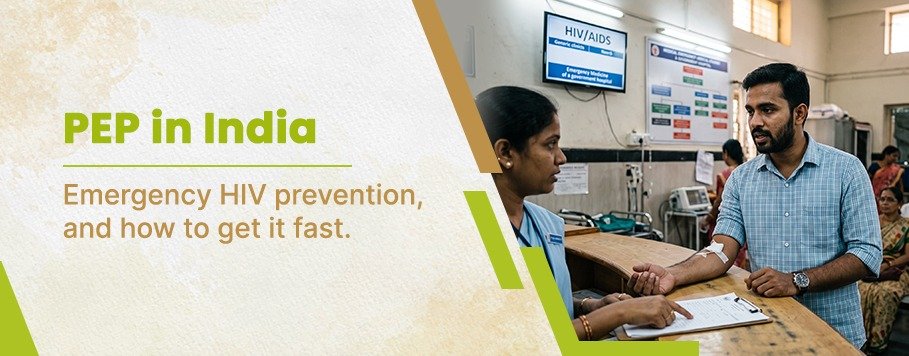
If you think you may have been exposed to HIV, there is an emergency option that many people do not know exists: PEP. Taken quickly enough, PEP can stop HIV from taking hold. But it is time-critical, and every hour counts. This complete guide explains what PEP is, how the 72-hour window works, who it is for, and how to get it fast in India.
Whether you are worried right now or want to be prepared, this guide gives you the clear, calm information you need, along with links to more detailed articles on timing, access, and cost.
If you may have been exposed in the last 72 hours:
|
Quick Summary / Key Takeaways
|
PEP stands for post-exposure prophylaxis. It is a short course of HIV medicine taken after a possible exposure to stop the virus from establishing an infection. “Post-exposure” means after exposure, and “prophylaxis” means prevention. In other words, PEP is emergency prevention. You can access it through PEP for emergency HIV prevention.
PEP only works if it is started quickly. It must begin as soon as possible after exposure, and no later than 72 hours (three days). After that window, it is generally too late to be effective. This is the single most important thing to understand about PEP, which is why we cover it in detail in PEP within 72 hours: what to do.
Once started, PEP is taken for a full 28-day course. Completing the whole course, exactly as prescribed, is essential for it to work. Stopping early or missing doses reduces its protection.
In the first hours and days after HIV enters the body, there is a short window before the infection becomes established. PEP uses HIV medicines during this window to stop the virus from making copies of itself and taking hold. That is why speed matters so much: the medicine has to get to work before the virus settles in.
PEP is for HIV-negative people who have had a specific, possible exposure to HIV. Common situations include:
PEP is an emergency measure for one-off situations. If you find you need PEP repeatedly, or have ongoing risk, your doctor may suggest PrEP as planned, ongoing protection instead.
| Stage | What happens |
|---|---|
| As soon as possible (within 72 hours) | Seek care urgently; a clinician assesses the exposure and starts PEP |
| Baseline test | An HIV test confirms your starting status |
| 28-day course | Take PEP every day, exactly as prescribed, without stopping |
| Follow-up testing | Repeat HIV testing after the course to confirm your status |
| Ongoing prevention | If risk continues, discuss PrEP for the future |
PEP is highly effective when started quickly and taken correctly, but it is not a 100% guarantee. Its success depends on starting within the window, completing the full 28 days, and taking every dose. This is not a reason for fear, but a reason to act fast and follow the course closely. Being honest about this also underlines why prevention tools like condoms and PrEP matter for the longer term.
Some people experience mild side effects during the 28-day course, such as nausea, tiredness, or headache, which usually settle. Do not stop the course because of mild side effects; speak to your doctor, who can help. PEP also involves a baseline HIV test at the start and follow-up testing afterwards, arranged through HIV lab testing.
Because timing is critical, knowing where to go in advance helps. PEP can be obtained through clinics, hospitals, and dedicated HIV services. The key is to seek care immediately rather than waiting. Our guide on where to get PEP fast in India explains your options, and you can also start with an urgent doctor consultation.
These two are easily confused. PEP is emergency prevention taken after a possible exposure, within 72 hours. PrEP is planned prevention taken before potential exposure, as ongoing protection for people who maybe exposed to HIV. In short: PEP is for emergencies, PrEP is for the ongoing. We compare them fully in PrEP vs PEP: key differences, and you can read the complete guide to PrEP in India for ongoing options.
| Myth | Fact |
|---|---|
| PEP can be started any time after exposure. | PEP must begin within 72 hours; sooner is better. |
| You only need to take PEP for a few days. | PEP is a full 28-day course that must be completed. |
| PEP guarantees you will not get HIV. | PEP is highly effective when taken correctly, but not guaranteed. |
| PEP is the same as PrEP. | PEP is emergency prevention; PrEP is planned, ongoing prevention. |
| Mild side effects mean you should stop PEP. | Do not stop for mild effects; ask your doctor for help to continue. |
Seek care urgently, the same day, if you may have been exposed to HIV in the last 72 hours, so PEP can be started in time. Also speak to a doctor if you have side effects during the course, or if you find you need PEP more than once, which may mean PrEP is worth considering. When in doubt, consult an HIV specialist or healthcare professional without delay.
PEP is a powerful emergency tool that can prevent HIV after a possible exposure, but it works only if you act fast, within 72 hours, and complete the full 28-day course. If you are ever in that situation, the message is simple: do not wait, seek help immediately. And for the longer term, prevention tools like condoms and PrEP can give you lasting peace of mind.
If you may have been exposed, act now. TAAL+ Healthcare offers PEP for emergency HIV prevention, confidential testing, and a private HIV doctor consultation to help you get protection in time.
PEP (post-exposure prophylaxis) is a short course of HIV medicine taken after a possible exposure to prevent HIV from taking hold. It must be started as soon as possible, within 72 hours, and taken for a full 28 days.
PEP must begin as soon as possible and no later than 72 hours (three days) after a possible exposure. The sooner it starts, the better it works. After 72 hours it is generally too late to be effective.
PEP is taken for a full 28-day course. Completing the entire course exactly as prescribed is essential. Stopping early or missing doses reduces how well it protects you.
PEP is highly effective when started quickly and taken correctly, but it is not a 100% guarantee. Its success depends on starting within 72 hours, completing all 28 days, and taking every dose.
PEP is for HIV-negative people after a specific possible exposure, such as unprotected sex or a condom failure with a partner who has or may have HIV, sexual assault, sharing needles, or a needle-stick injury. It is an emergency, not ongoing, measure.
Some people have mild side effects during the course, such as nausea, tiredness, or headache, which usually settle. Do not stop the course for mild effects; your doctor can help you manage them so you can complete it.
PEP can be obtained through clinics, hospitals, and dedicated HIV services. Because timing is critical, seek care immediately rather than waiting. An urgent consultation can help you start PEP in time.
PEP is emergency prevention taken after a possible exposure, within 72 hours. PrEP is planned prevention taken before potential exposure, as ongoing protection for people at risk. PEP is for emergencies; PrEP is for the ongoing.
You will have follow-up HIV testing to confirm your status after the course. If you have ongoing risk of exposure, your doctor may suggest PrEP as planned protection going forward.
PEP can be used again for a new emergency, but repeatedly needing it suggests ongoing risk. In that case, PrEP, taken regularly as planned prevention, is usually a better long-term option. Discuss this with your doctor.
 +91 98925 15959

Before You Go
The HIV Test Kit Is Still FREE
A private HIV self-test, delivered in plain packaging. Result in 20 minutes, at home. No cost, no clinic visit, and a TAAL+ doctor on call whichever way it goes.
Offer valid only in India till 30 September 2026. T&Cs apply.