


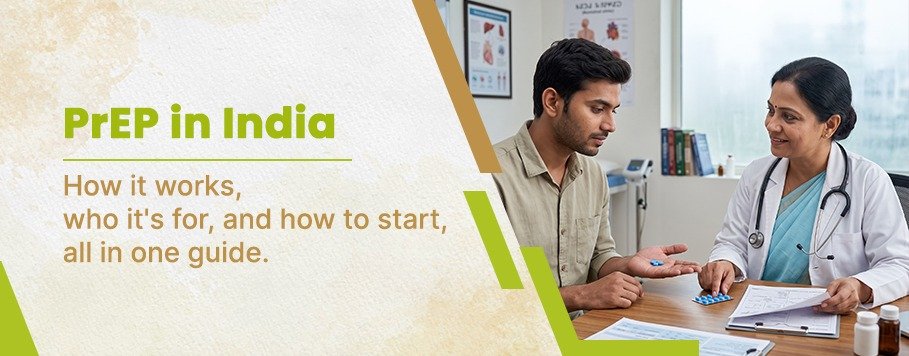
PrEP is one of the most powerful tools we have to prevent HIV, and it is available in India. Yet many people have never heard of it, or are unsure whether it is meant for them, how to get it, or whether it is safe. This complete guide answers those questions clearly and simply, so you can make an informed choice about protecting your health.
Whether you are exploring PrEP for the first time or helping someone else understand it, this guide covers what PrEP is, how it works, who benefits, the options available, how effective it is, what it costs to consider, safety and monitoring, and exactly how to start. Think of it as your starting point, with links to more detailed articles on each topic.
Quick Summary / Key Takeaways
|
What Is PrEP?
PrEP stands for pre-exposure prophylaxis. In plain terms, it is medicine taken by people who do not have HIV to stop them from getting it. The word “prophylaxis” simply means prevention. When taken correctly, PrEP builds up protection in the body so that if HIV is encountered, it cannot take hold. You can explore the basics further in our guide on what is PrEP and who should take it.
It is important to be clear about what PrEP is not. It is not a cure for HIV, and it is not for people who already have HIV. It is a preventive medicine for HIV-negative people, used before any possible exposure, as ongoing protection.
How Does PrEP Work?
PrEP works by keeping a protective level of medicine in your body. If you are exposed to HIV, that medicine stops the virus from making copies of itself and establishing an infection. For this to work, PrEP has to be taken consistently as prescribed, because the protection depends on maintaining the right level in the body over time.
This is why adherence, taking it regularly, is the single most important factor in how well PrEP protects you. Used properly, the protection is very strong. Used inconsistently, it drops.
Who Should Consider PrEP?
PrEP is for anyone who is HIV-negative and has an ongoing chance of being exposed to HIV. It is not limited to any one group. You might consider PrEP if you:
- Have a partner who is living with HIV, especially if they are not yet virally suppressed.
- Have a partner whose HIV status you do not know.
- Have more than one sexual partner, or a partner who does.
- Do not always use condoms and may be at risk.
- Have recently had an STI, or have used PEP (emergency prevention) more than once.
- Share injecting equipment.
This is a general guide, not a rulebook. A clinician can help you assess your own situation, which we explore in detail in who is eligible for PrEP in India.
The PrEP Options
PrEP is not a single product. Depending on availability and what suits your life, there are different approaches. Your doctor will help you choose.
| Option | How it is used | Good to know |
|---|---|---|
| Daily oral PrEP | One tablet taken every day | The most established and widely available form |
| On-demand oral PrEP | Timed doses around specific occasions, under medical guidance | Suits some people; not for everyone |
| Longer-acting options | Newer long-acting methods given at intervals | Expanding globally; availability varies in India |
We compare daily and on-demand approaches in more depth in our cluster articles, and your clinician will confirm what is available and suitable. Understanding the difference between daily and event-based use is covered alongside how to start PrEP step by step.
How Effective Is PrEP?
When taken as prescribed, PrEP is highly effective at preventing HIV, one of the most effective prevention tools available. The key phrase is “as prescribed.” Its effectiveness is closely tied to taking it consistently. Missing doses reduces the level of protection, which is why building a routine matters so much.
PrEP does not protect against other sexually transmitted infections or prevent pregnancy. For that reason, many people use PrEP alongside condoms for broader protection. Combining methods gives you the widest cover.
How to Start PrEP in India
Starting PrEP follows a clear, safe path. It is not something to begin on your own, because a few checks protect your health and make sure PrEP is right for you.
- Confirm you are HIV-negative. PrEP is only for HIV-negative people, so testing comes first. Book HIV lab testing.
- Have a baseline health check, including kidney function and screening for other infections, as advised.
- Discuss the right option (daily or on-demand) and how to take it correctly with your doctor.
- Start PrEP and attend regular follow-ups, covered in PrEP follow-up tests and monitoring.
You can begin this process through a confidential doctor consultation or the PrEP for HIV prevention service.
Is PrEP Safe? Side Effects and Monitoring
PrEP is generally well tolerated. Some people notice mild side effects when starting, such as nausea or headache, which often settle within a few weeks. Because PrEP is taken long term, doctors monitor your health with periodic checks. We cover this fully in PrEP side effects and safety.
Regular follow-up is part of PrEP, not an optional extra. It usually includes repeat HIV testing (to confirm you remain negative), checks on kidney health, and screening for other STIs. This routine keeps PrEP working safely for you over time.
What Does PrEP Cost in India?
The cost of PrEP in India depends on the specific medicine and where you obtain it, and generic options have made it more affordable than many people expect. Because prices change, it is best to check current pricing directly. Our dedicated cluster article breaks down PrEP costs and the factors that affect them, and you can also ask during a consultation. For treatment-related medicine, see the wider context in PrEP vs PEP: key differences.
PrEP vs PEP: What Is the Difference?
These two are easy to confuse. PrEP is planned prevention, taken before potential exposure as ongoing protection. PEP (post-exposure prophylaxis) is emergency medicine taken after a possible exposure, and it must start within 72 hours. In short: PrEP is prevention for the ongoing, PEP is for emergencies. If you may have been exposed in the last 72 hours, see PEP for emergency HIV prevention urgently.
Myths vs Facts: PrEP
| Myth | Fact |
|---|---|
| PrEP is only for certain groups of people. | PrEP is for any HIV-negative person with ongoing risk. |
| PrEP protects against all STIs. | PrEP prevents HIV only; condoms protect against other STIs. |
| You can start PrEP on your own. | PrEP starts with confirming a negative status and a medical check. |
| PrEP means you no longer need condoms. | Condoms still add protection against other STIs and pregnancy. |
| PrEP is not available in India. | PrEP is available in India, including affordable generic options. |
When to Consult a Doctor
Speak to a healthcare professional if you want to start PrEP, are unsure whether it is right for you, have side effects while on it, or think you may have been exposed to HIV in the last 72 hours (in which case seek PEP urgently). PrEP works best as a partnership with your care team. When in doubt, consult an HIV specialist or healthcare professional.
Conclusion
PrEP has changed HIV prevention for the better, and in India it is accessible, safe, and highly effective when taken as prescribed. It is not for one type of person; it is for anyone who is HIV-negative and wants strong, reliable protection against HIV. The essentials are simple: confirm you are negative, choose the right option with your doctor, take it consistently, and keep up with follow-up.
If you are considering PrEP, the best next step is a confidential conversation tailored to you. TAAL+ Healthcare offers PrEP for HIV prevention and a private HIV doctor consultation to help you start safely and stay protected.
Frequently Asked Questions
What is PrEP?
PrEP (pre-exposure prophylaxis) is medicine taken by HIV-negative people to greatly reduce the risk of getting HIV. Taken as prescribed, it keeps a protective level of medicine in the body so that if HIV is encountered, it cannot take hold.
Is PrEP available in India?
Yes. PrEP is available in India, including affordable generic options. It is started after confirming you are HIV-negative and involves regular follow-up, so it is best begun through a doctor or a dedicated PrEP service.
How effective is PrEP at preventing HIV?
When taken as prescribed, PrEP is highly effective, one of the most effective HIV prevention tools available. Its effectiveness depends closely on taking it consistently; missing doses reduces protection.
Who should take PrEP?
PrEP is for any HIV-negative person with an ongoing chance of HIV exposure, such as having a partner with HIV or of unknown status, multiple partners, inconsistent condom use, a recent STI, or sharing injecting equipment. A clinician can help you decide.
How do I start PrEP?
First confirm you are HIV-negative, then have a baseline health check including kidney function and STI screening. Your doctor will advise the right option and how to take it, and arrange regular follow-up. It should not be started on your own.
Does PrEP protect against other STIs or pregnancy?
No. PrEP prevents HIV only. It does not protect against other sexually transmitted infections or prevent pregnancy, so many people use PrEP alongside condoms for broader protection.
Is PrEP safe?
PrEP is generally well tolerated. Some people have mild side effects such as nausea or headache when starting, which often settle within weeks. Regular monitoring, including kidney checks and repeat HIV testing, keeps it safe over the long term.
What is the difference between PrEP and PEP?
PrEP is planned prevention taken before potential exposure as ongoing protection. PEP is emergency medicine taken after a possible exposure and must start within 72 hours. PrEP is for the ongoing; PEP is for emergencies.
Do I still need condoms if I take PrEP?
Yes. PrEP is excellent at preventing HIV but does not cover other STIs or pregnancy. Using condoms alongside PrEP gives layered protection against HIV and other sexually transmitted infections.
How often do I need check-ups on PrEP?
PrEP involves regular follow-up, typically including repeat HIV testing, kidney health checks, and STI screening. Your doctor will set the schedule. This routine is part of using PrEP safely and effectively.


