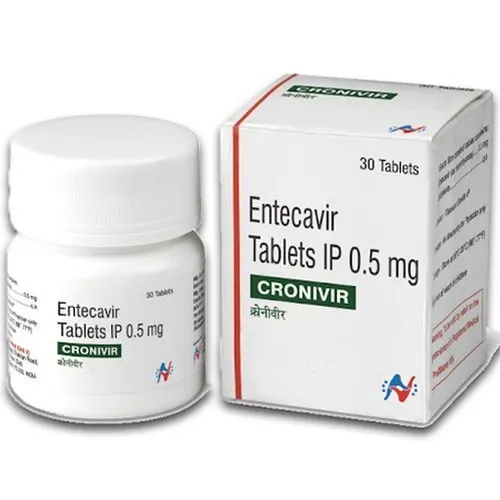
What is Cronivir Tablet used for?
›Cronivir Tablet is used to treat chronic hepatitis B virus (HBV) infection in adults. It contains Entecavir 0.5mg — a nucleoside analogue antiviral — which lowers HBV DNA viral load, helps improve liver inflammation, and reduces the long-term risk of complications such as cirrhosis and liver cancer when taken as prescribed.
How should Cronivir Tablet be taken?
›The usual dose is one Cronivir Tablet (Entecavir 0.5mg) once daily, or as prescribed by your doctor. Take it on an empty stomach — at least 2 hours after a meal and 2 hours before your next meal — and swallow the tablet whole with water. Never change the dose or stop the medicine without your doctor's advice.
Does Cronivir Tablet cure hepatitis B?
›No. Cronivir Tablet does not cure hepatitis B. It controls the infection by reducing the amount of virus in your body and slowing liver damage, but treatment usually needs to be continued long-term under medical supervision. It also does not prevent the spread of HBV to others.
Why must Cronivir Tablet be taken on an empty stomach?
›Food reduces how much Entecavir your body absorbs, which can make the medicine less effective. Taking Cronivir on an empty stomach — well apart from meals — ensures the drug works at its full strength against the hepatitis B virus. Keeping the same timing each day helps maintain steady levels in the body.
What happens if I stop taking Cronivir Tablet suddenly?
›Stopping Cronivir Tablet abruptly can cause a severe, sudden worsening (flare) of hepatitis B, with rapid liver inflammation. This can be dangerous, so you should never stop the medicine on your own. If treatment needs to end, your doctor will monitor your liver function closely for several months afterwards.
Can Cronivir Tablet be used by people who have both HIV and hepatitis B?
›Only under specialist medical supervision. Entecavir has some activity against HIV, and using it alone in someone with untreated HIV can encourage HIV drug resistance. People with HIV–HBV co-infection should be on a fully suppressive HIV treatment (ART) before or alongside Cronivir, exactly as directed by their doctor.
What is the difference between Cronivir 0.5mg and 1mg?
›Cronivir 0.5mg is the usual dose for patients starting hepatitis B treatment who have not taken similar antivirals before. The 1mg strength is generally reserved for patients who have not responded to lamivudine or who have advanced (decompensated) liver disease. Your doctor decides the correct strength based on your treatment history and liver condition.
Is Cronivir Tablet safe for patients with kidney problems?
›Cronivir should be used with caution in patients with reduced kidney function, and the dose may need to be adjusted depending on how well your kidneys are working. Regular kidney function monitoring is recommended during treatment. Always tell your doctor about any existing kidney disease before starting Cronivir.
What should I do if I miss a dose of Cronivir Tablet?
›Take the missed dose as soon as you remember. If it is almost time for your next dose, skip the missed one and continue your regular schedule — do not take a double dose. Missing doses can reduce how well the medicine controls the virus and may increase the risk of resistance, so try to take it at the same time each day.
What are the serious side effects of Cronivir Tablet, and when should I seek help?
›Most people tolerate Cronivir well, with mild effects such as headache, nausea, or dizziness. Seek medical help immediately if you notice signs of lactic acidosis (unusual muscle pain, trouble breathing, severe weakness), liver problems (yellowing of the skin or eyes, dark urine, severe abdominal pain), or a severe allergic reaction (swelling of the face, difficulty breathing). These are rare but require urgent attention.








 30% Off
 26% Off
 40% Off
 64% Off
 45% Off
 30% Off
 +91 98925 15959