


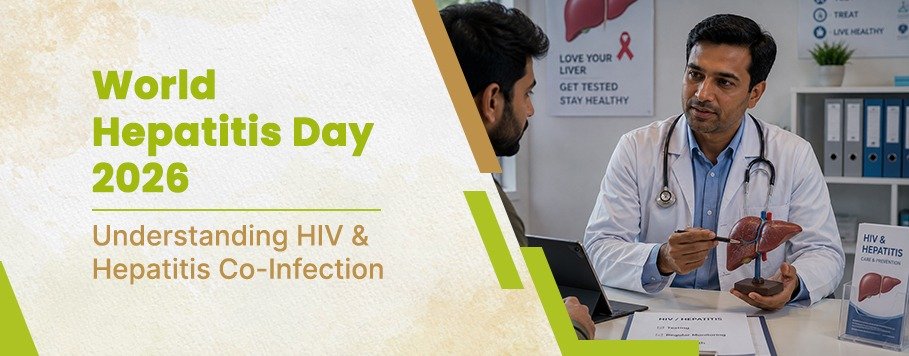
Every year on 28 July, the world marks World Hepatitis Day to raise awareness of viral hepatitis and to push towards the global goal of eliminating it as a public health threat by 2030. For people living with HIV, the day carries an extra message: HIV and hepatitis often travel together, and understanding this connection protects your health.
This guide explains HIV and hepatitis co-infection in simple terms, why it matters, how hepatitis B and hepatitis C are screened and managed, and the practical steps that keep your liver and your overall health strong.
Quick Summary / Key Takeaways
|
Every year on 28 July, the world marks World Hepatitis Day to raise awareness of viral hepatitis and to push towards the global goal of eliminating it as a public health threat by 2030. For people living with HIV, the day carries an extra message: HIV and hepatitis often travel together, and understanding this connection protects your health.
This guide explains HIV and hepatitis co-infection in simple terms, why it matters, how hepatitis B and hepatitis C are screened and managed, and the practical steps that keep your liver and your overall health strong.
What Is HIV and Hepatitis Co-Infection?
Co-infection simply means having more than one infection at the same time. Here it refers to living with HIV alongside a viral hepatitis infection, usually hepatitis B (HBV) or hepatitis C (HCV). Because HIV and these viruses can spread through similar routes, such as blood-to-blood contact and, for some, sexual contact, they are commonly found together. Our guide on how HIV spreads explains those shared routes.
Why Co-Infection Matters
Hepatitis B and C mainly affect the liver, and over time can cause scarring (cirrhosis) or liver cancer. The important point for people with HIV is that when the immune system is also dealing with HIV, liver disease from hepatitis can progress faster than it would in someone without HIV. This is why identifying and managing co-infection early makes a real difference to long-term health.
Hepatitis B and HIV
Hepatitis B is a viral infection that attacks the liver and can cause both acute and chronic disease. The routes of transmission overlap significantly with HIV, which is why the two are frequently found together. Key points:
- A safe, effective hepatitis B vaccine is available and is recommended for people with HIV who are not already immune.
- Some medicines used in HIV treatment & ART care also work against hepatitis B, meaning treatment can address both at once.
- Regular liver monitoring is part of good care when both infections are present.
Hepatitis C and HIV
Hepatitis C is a blood-borne virus that causes liver inflammation and, if untreated, can lead to serious liver damage over time. The headline for 2026 is genuinely hopeful: hepatitis C can now be cured in most people, including those living with HIV, using short courses of direct-acting antiviral medicines. This has transformed what was once a difficult, long treatment into something much more manageable. If you have HIV, ask your doctor about hepatitis C screening as part of your routine care.
Screening: Who Should Be Tested?
Screening for hepatitis B and C is recommended for everyone with HIV, and ideally at the time of HIV diagnosis. Testing is the only way to know your status, because both infections can be present for years without obvious symptoms. Confidential HIV lab testing services also cover hepatitis screening, and a doctor consultation can help you plan the right tests for your situation. You can also learn more about how HIV and related testing works.
Co-Infection Management: Practical Steps
| Step | What it involves |
|---|---|
| Screen at diagnosis | Test for hepatitis B and C when diagnosed with HIV |
| Vaccinate against hepatitis B | If not already immune, the vaccine is safe and effective |
| Start ART promptly | HIV treatment also protects the liver and may treat hepatitis B |
| Treat hepatitis C | Short direct-acting antiviral courses can cure most people |
| Monitor liver health | Regular check-ups track liver function over time |
| Avoid alcohol | Alcohol accelerates liver damage in the presence of viral hepatitis |
Understanding antiretroviral therapy (ART) is part of managing co-infection well, since treatment choices are made with both infections in mind.
Prevention: Reducing the Risk of Co-Infection
For people who are HIV-positive and do not yet have hepatitis B or C, prevention matters:
- Get vaccinated against hepatitis B if you have not already done so.
- Avoid sharing needles, syringes, or any equipment that contacts blood.
- Practice safer sex, since hepatitis C can be transmitted sexually, particularly in certain circumstances.
- Access sexual wellness services for regular STI and hepatitis screening as part of your overall health care.
World Hepatitis Day 2026: What It Means for HIV Care
This year’s World Hepatitis Day is an opportunity to check whether hepatitis screening is part of your HIV care routine, and to take action if it is not. Both hepatitis B and hepatitis C are manageable today in ways they simply were not a decade ago. Knowing your status, vaccinating where possible, and treating both infections together gives you the strongest possible foundation for long-term health.
Myths vs Facts: HIV and Hepatitis Co-Infection
| Myth | Fact |
|---|---|
| Only people who inject drugs get hepatitis alongside HIV. | Hepatitis B and C can spread through several routes; anyone with HIV can be co-infected. |
| Hepatitis C cannot be cured in people with HIV. | Hepatitis C is now curable for most people, including those living with HIV. |
| If I feel fine, I do not need hepatitis screening. | Both infections can be present for years without symptoms; only testing reveals them. |
| HIV treatment has nothing to do with hepatitis. | Some ART medicines also treat hepatitis B; treatment planning considers both. |
| The hepatitis B vaccine is not safe for people with HIV. | The vaccine is safe and recommended for people with HIV who are not already immune. |
| When to Consult a Doctor Speak to a doctor if you have not been screened for hepatitis B or C since your HIV diagnosis, if you have abnormal liver function results, or if you want to understand your treatment options for co-infection. Hepatitis screening and management are a normal part of HIV care. When in doubt, consult an HIV specialist or healthcare professional. |
Conclusion
World Hepatitis Day 2026 is a reminder that HIV care is whole-body care. Hepatitis B and C are common travel companions of HIV, and they are manageable, especially with early detection, vaccination, and modern treatment. Whether it is a hepatitis B vaccine, a short hepatitis C cure, or simply knowing your status, the tools are available and the difference they make is real.
If hepatitis screening is not yet part of your HIV care, now is the ideal time to add it. TAAL+ Healthcare offers HIV lab testing including hepatitis screening and a confidential HIV doctor consultation to help you protect your liver and your long-term health.
Frequently Asked Questions
What is HIV and hepatitis co-infection?
Co-infection means having more than one infection at the same time. HIV and hepatitis co-infection refers to living with HIV alongside a viral hepatitis infection, usually hepatitis B (HBV) or hepatitis C (HCV), which share similar routes of transmission.
Why does co-infection matter more than having just one infection?
Because HIV affects the immune system, liver disease from hepatitis can progress faster in people with HIV than in those without. Early detection and treatment of both infections significantly slows this progression and protects long-term health.
Can hepatitis C be cured in people living with HIV?
Yes. Hepatitis C can now be cured in most people, including those living with HIV, using short courses of direct-acting antiviral medicines. This is one of the most significant advances in hepatitis care in recent years.
Should everyone with HIV be screened for hepatitis B and C?
Yes. Screening for hepatitis B and C is recommended for all people with HIV, ideally at the time of HIV diagnosis, because both infections can be present for years without obvious symptoms.
Is the hepatitis B vaccine safe for people living with HIV?
Yes. The hepatitis B vaccine is safe and recommended for people with HIV who are not already immune. Vaccination prevents hepatitis B infection and protects the liver.
Can HIV treatment also treat hepatitis B?
Some medicines used in HIV treatment (ART) are also active against hepatitis B. This means treatment planning for someone with both infections can address both at once, though the specific regimen needs medical guidance.
When is World Hepatitis Day?
World Hepatitis Day is observed every year on 28 July. It aims to raise awareness of viral hepatitis and to support the global goal of eliminating it as a public health threat by 2030.
What practical steps protect against co-infection?
Get screened for hepatitis B and C, vaccinate against hepatitis B if not already immune, start HIV treatment promptly, treat hepatitis C if present, monitor liver health regularly, and avoid alcohol, which accelerates liver damage in the presence of viral hepatitis.


