


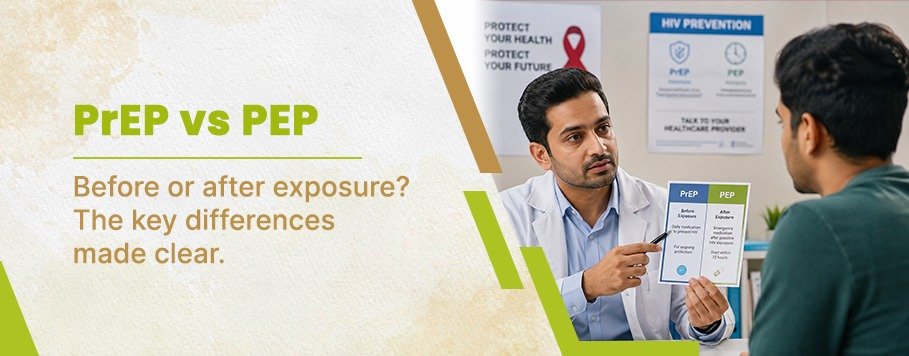
PrEP and PEP sound almost the same, and both help prevent HIV, so it is no surprise that people mix them up. But they are used in very different situations, and knowing the difference could genuinely matter one day. This guide breaks down PrEP vs PEP in plain language, so you know which is which and when each applies.
The simplest way to remember it: PrEP is planned prevention for the ongoing, and PEP is emergency prevention after a possible exposure. Let us look at what that means in practice.
Quick Summary / Key Takeaways
|
What Is PrEP?
PrEP (pre-exposure prophylaxis) is medicine that HIV-negative people take before potential exposure to prevent HIV. It is planned, ongoing protection, taken regularly as prescribed. It suits people with an ongoing chance of exposure. Learn more in the complete guide to PrEP in India.
What Is PEP?
PEP (post-exposure prophylaxis) is a short course of HIV medicine taken after a possible exposure, as an emergency measure. It must start within 72 hours and is taken for 28 days. It suits one-off situations, such as a condom failure or another specific exposure. See the complete guide to PEP in India.
PrEP vs PEP: Side by Side
| Feature | PrEP | PEP |
| When taken | Before potential exposure | After a possible exposure |
| Purpose | Ongoing, planned prevention | Emergency prevention |
| Timing | Taken regularly over time | Must start within 72 hours |
| Duration | For as long as exposure continues | A 28-day course |
| Best for | Ongoing degree of exposure | A specific, one-off exposure |
| Who it is for | HIV-negative people | HIV-negative people |
When Should You Use PrEP?
PrEP makes sense when you have an ongoing chance of HIV exposure, for example a partner living with HIV, a partner of unknown status, multiple partners, or inconsistent condom use. It is planned ahead and taken regularly. If that sounds like your situation, see how to start PrEP step by step.
When Should You Use PEP?
PEP is for emergencies: a specific, possible exposure that has just happened, such as unprotected sex or a condom that broke with a partner who has or may have HIV, a needle-stick, or sexual assault. The key is speed, it must start within 72 hours. If this is you right now, read PEP within 72 hours: what to do and seek care immediately.
How PrEP and PEP Work Together
These two are not rivals; they complement each other. Someone might use PEP for an unexpected emergency, and then, if they realise they have ongoing chance of exposure, move on to PrEP for lasting protection. In fact, needing PEP more than once is often a sign that PrEP would suit you better. Think of PEP as the emergency brake and PrEP as the seatbelt you wear all the time.
Myths vs Facts: PrEP and PEP
| Myth | Fact |
| PrEP and PEP are the same thing. | PrEP is planned, ongoing prevention; PEP is emergency prevention after exposure. |
| You can start PEP whenever you like. | PEP must begin within 72 hours of exposure to work. |
| PrEP is only needed after an emergency. | PrEP is taken regularly, before exposure, for ongoing protection. |
| If you use PrEP, you never need PEP. | PrEP is very effective, but a clinician may still advise PEP in some situations. |
| Only certain people need either. | Both are for any HIV-negative person whose situation calls for them. |
When to Consult a Doctor
Speak to a healthcare professional if you are unsure whether PrEP or PEP is right for you, or want to start ongoing prevention. If you may have been exposed to HIV in the last 72 hours, do not wait to weigh up options, seek PEP urgently. When in doubt, consult an HIV specialist or healthcare professional.
Conclusion
PrEP vs PEP comes down to timing and purpose. PrEP is planned, ongoing prevention taken before exposure; PEP is emergency prevention taken within 72 hours after a possible exposure. Both are for HIV-negative people, both are highly effective when used correctly, and they work well together. Knowing which is which means you can act quickly and confidently if you ever need to.
Not sure which is right for you? TAAL+ Healthcare offers both PrEP for HIV prevention and PEP for emergency HIV prevention, plus a private HIV doctor consultation to help you choose.
Frequently Asked Questions
What is the difference between PrEP and PEP?
PrEP is planned prevention taken before potential exposure, as ongoing protection for people with chance of HIV exposure. PEP is emergency prevention taken after a possible exposure and must start within 72 hours. PrEP is for the ongoing prevention; PEP is for emergencies.
Is PrEP the same as PEP?
No. Although both prevent HIV and are for HIV-negative people, they are used differently. PrEP is taken regularly before exposure, while PEP is a 28-day emergency course started within 72 hours of a possible exposure.
Should I take PrEP or PEP?
It depends on your situation. If you have ongoing chance of exposure, PrEP taken regularly is usually best. If you have just had a specific possible exposure, PEP is the emergency option, started within 72 hours. A clinician can help you decide.
When should I use PEP instead of PrEP?
Use PEP for a specific, recent possible exposure, such as a condom failure or needle-stick, where you need emergency prevention within 72 hours. PrEP is for planned, ongoing protection rather than one-off emergencies.
Can I switch from PEP to PrEP?
Yes. Many people use PEP for an emergency and then start PrEP for ongoing protection, especially if they have continuing chance of exposure. Needing PEP more than once is often a sign that PrEP would suit you better.
Are PrEP and PEP both effective?
Yes, both are highly effective when used correctly. PrEP works when taken consistently as prescribed; PEP works when started within 72 hours and taken for the full 28-day course.
Do PrEP and PEP protect against other STIs?
No. Both prevent HIV only, not other sexually transmitted infections or pregnancy. Using condoms alongside either gives broader protection against other STIs.
Who can take PrEP or PEP?
Both are for HIV-negative people. PrEP suits those with ongoing chance of exposure, while PEP is for anyone HIV-negative after a specific possible exposure. A clinician confirms which is appropriate and prescribes it safely.


